Aluminium scaffolding has become one of the most popular temporary access solutions on construction sites, renovation works, and maintenance projects. Lightweight yet strong, it offers safety, efficiency, and flexibility were working at height is required.
In this blog, we explain what aluminium scaffolding is, how it works on site, its key benefits, components, and safety practices — in simple, easy‑to‑understand language.
What Is Aluminium Scaffolding?
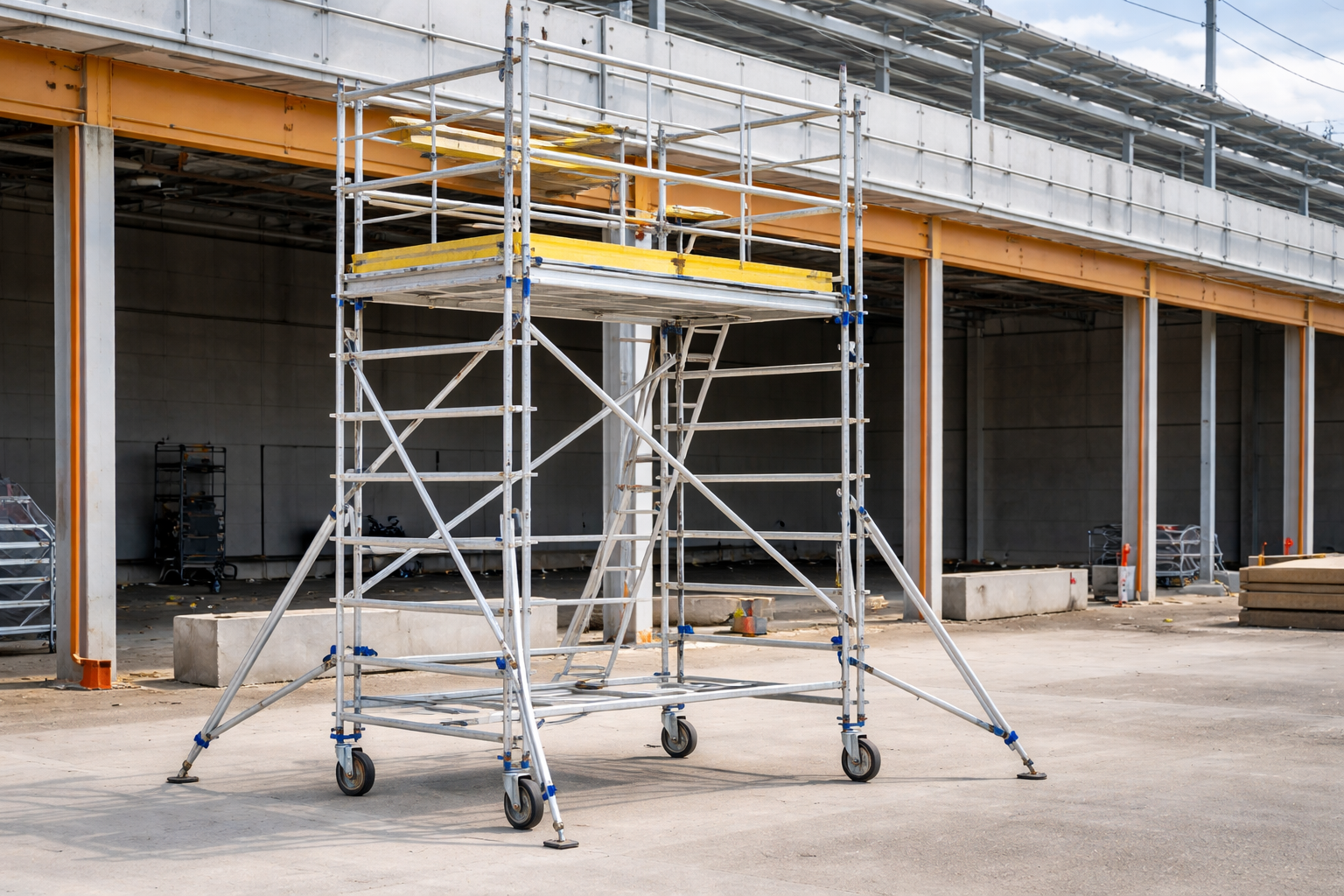
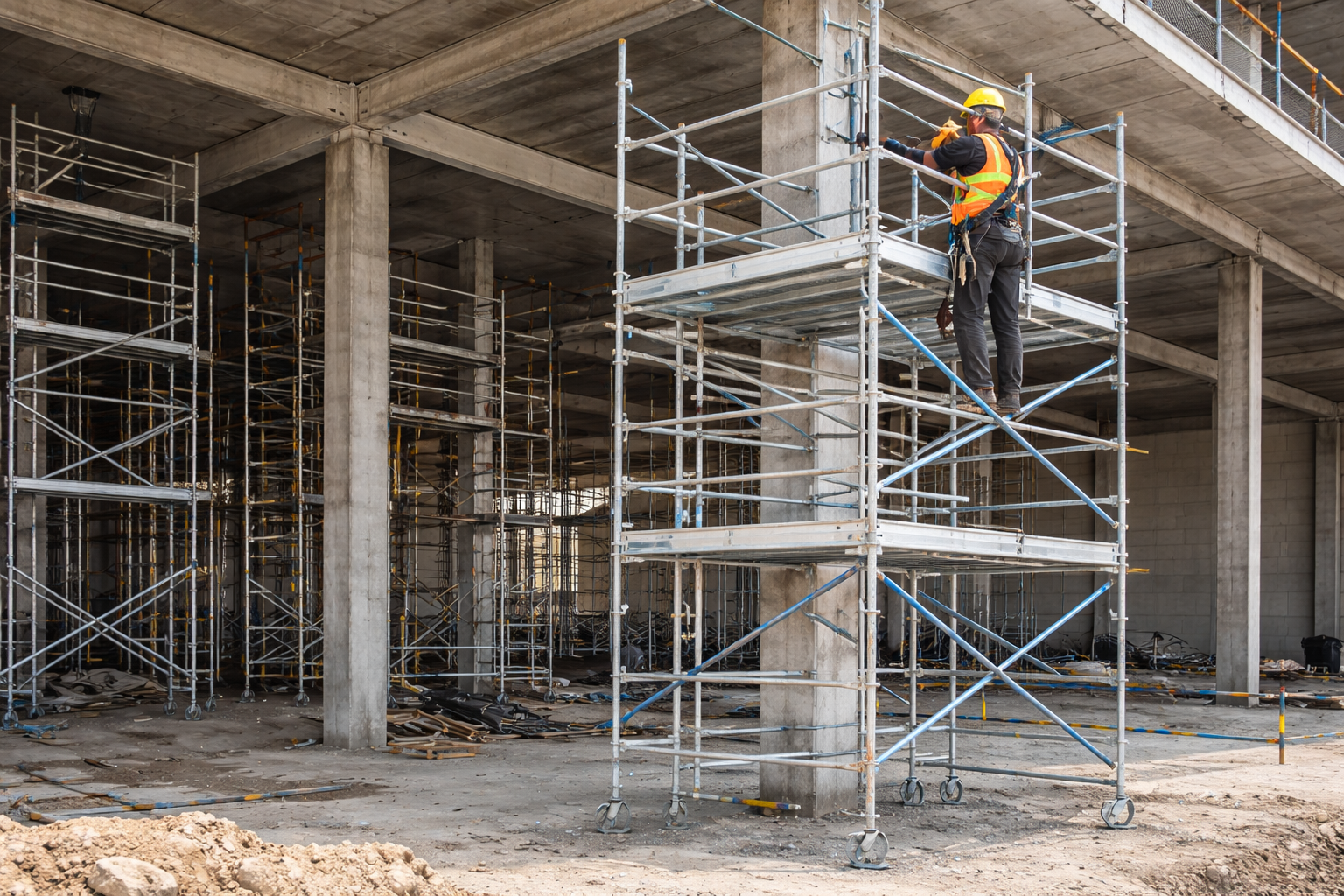
Aluminium scaffolding is a temporary structure made primarily of aluminium that provides a stable platform for workers, tools and materials during construction, repair or painting tasks.
Unlike traditional steel scaffolding, aluminium scaffolding is lightweight, easy to assemble, and corrosion‑resistant. This makes it ideal for fast‑paced job sites and projects where frequent setup and dismantling are required.
Why Aluminium? Key Advantages
Before we dive deeper, let’s understand why aluminium is the material of choice:
- Lightweight
Aluminium weighs significantly less than steel. This means:
- Faster installation and removal
- Less labour fatigue
- Lower transport costs
- Corrosion‑Resistant
Aluminium doesn’t rust. On sites with moisture or rain exposure, this increases durability and lifespan.
- Easy Handling
Whether it’s a movable aluminium scaffold tower or a double width aluminium scaffolding, aluminium components can be handled by fewer workers.
- Recyclable & Sustainable
Aluminium is fully recyclable without losing strength, making it an eco‑friendly choice.
Where Is Aluminium Scaffolding Used?
Aluminium scaffolding is widely used in:
- Building construction
- Exterior painting
- Electrical and HVAC installations
- Bridge and civil structure maintenance
- Facade works
- Industrial plants
Wherever safe access is needed at height — aluminium scaffolding is a go‑to choice.
Main Components of Aluminium Scaffolding
Understanding the main parts helps you see how a scaffold system works together:
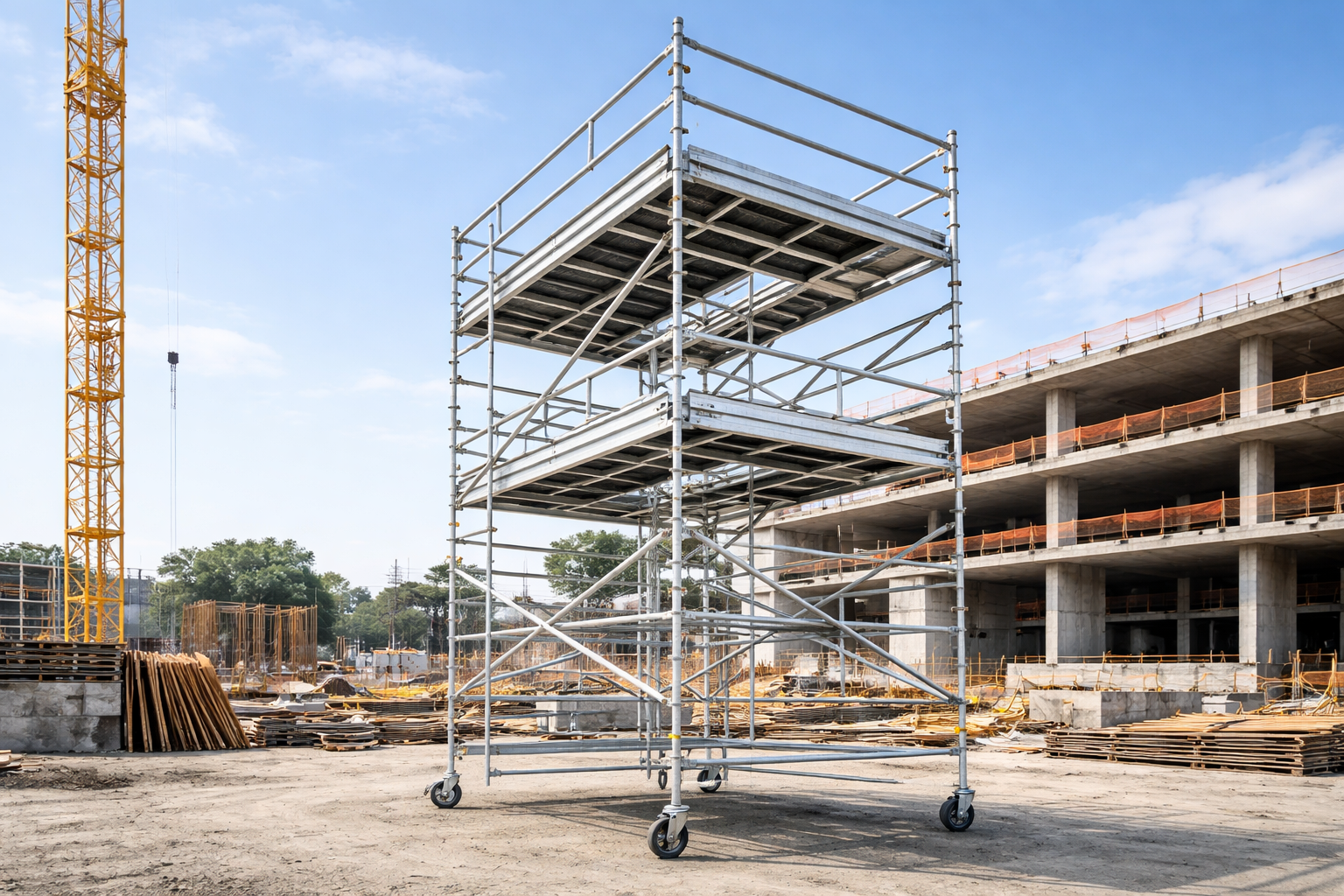
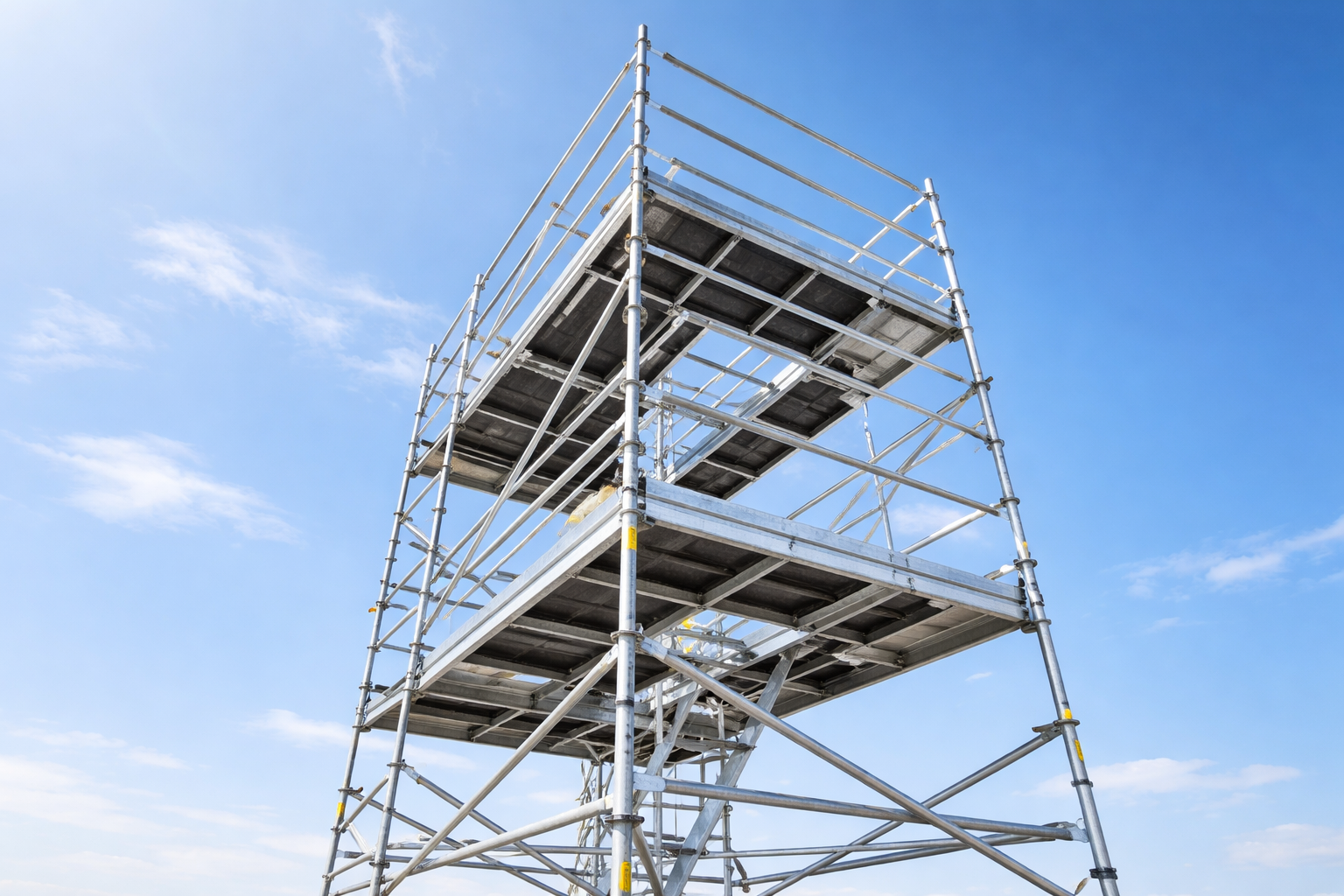
• Standards (Vertical Posts) – These are upright tubes that support the entire structure.
• Ledgers (Horizontal Braces) – Connect between vertical posts to form the skeleton of the scaffold.
• Work Platforms – Boards or planks where workers stand and place tools.
• Base Plates or Wheels – Provide stability — wheels allow mobility for mobile aluminium scaffold towers.
• Guardrails & Toe boards – Safety features to prevent falls and dropped tools.Each component is designed to fit easily and securely, enabling fast assembly and strong load support.
How Aluminium Scaffolding Works on Site
Now let’s break down how aluminium scaffolding actually works on a job site.
1. Site Assessment
Before erecting a scaffold, supervisors check:
- Ground level and stability
- Nearby structures
- Height and load requirements
This ensures the scaffold is designed safely and correctly.
2. Planning the Scaffold Layout
Based on the job, workers decide:
- Scaffold height and width
- Number of platforms
- Whether it needs to be fixed or mobile
This step ensures efficiency during work.
3. Base Installation
The first step onsite is setting up the base:
- Place base plates or wheels
- Adjust for level terrain
- Lock wheels if using mobile scaffolding
A level, secure base keeps the scaffold stable throughout use.
4. Erecting Standards and Ledgers
Vertical and horizontal members are connected:
- Uprights (standards) are placed first
- Ledgers are added at required heights
- Transoms are fitted to support platforms
These connections form the scaffold frame.
5. Fitting Platforms
Aluminium platforms or planks are installed at the desired working levels.
Because aluminium is light, platforms can be lifted and placed quickly.
6. Adding Safety Features
Safety rails and toe boards are installed to protect workers from falls and falling tools.
Depending on local safety rules, nets or harness anchor points may be added.
7. Inspection
A qualified supervisor checks the entire system before use.
This ensures the scaffold is erect, secure, and safe.
Different Types of Aluminium Scaffolding
Here are some commonly used systems:
- Single Width Aluminium Scaffolding – Ideal for narrow work areas such as corridors or wall painting.
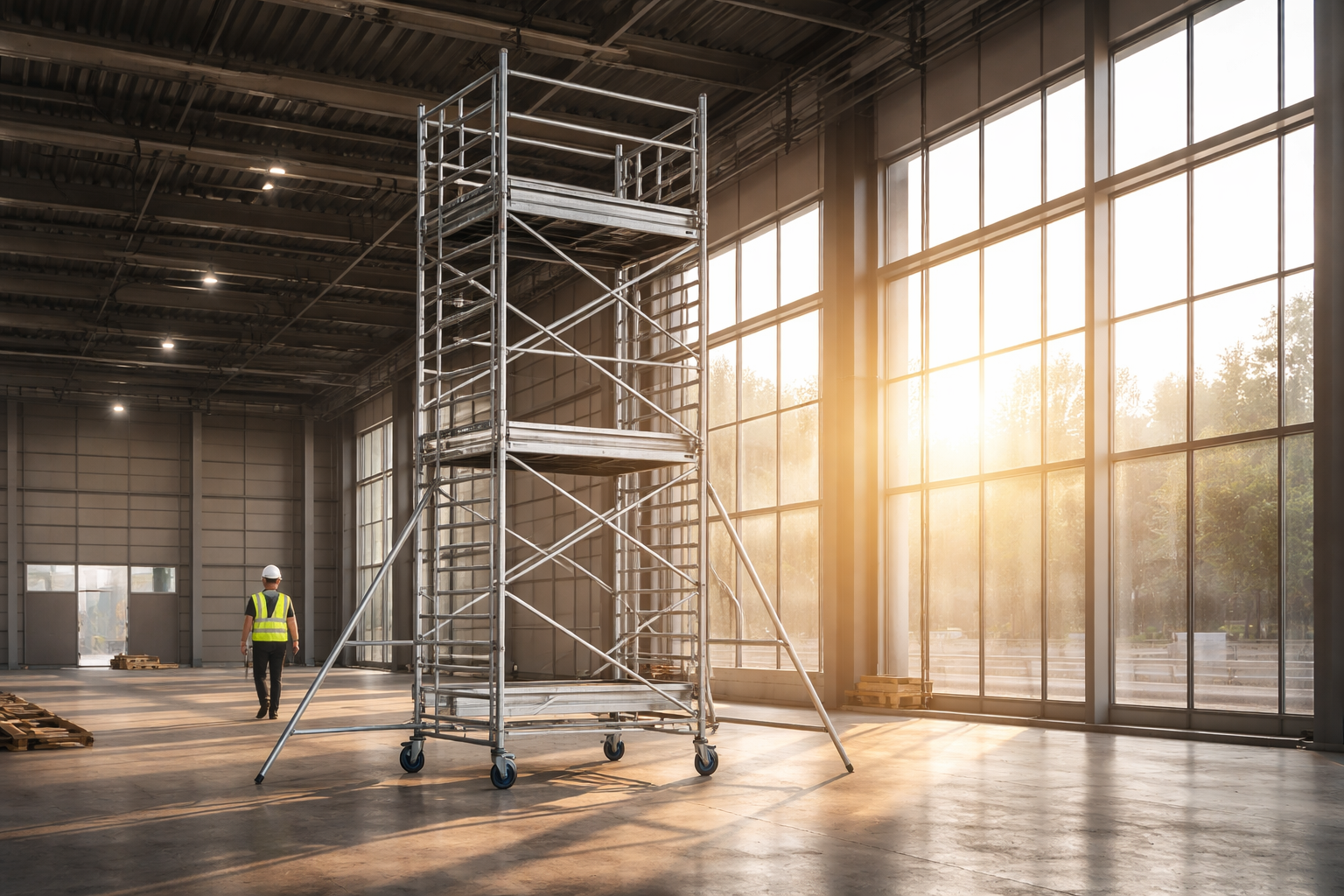
- Double Width Aluminium Scaffolding – Provides more space for workers and materials — perfect for larger jobs.
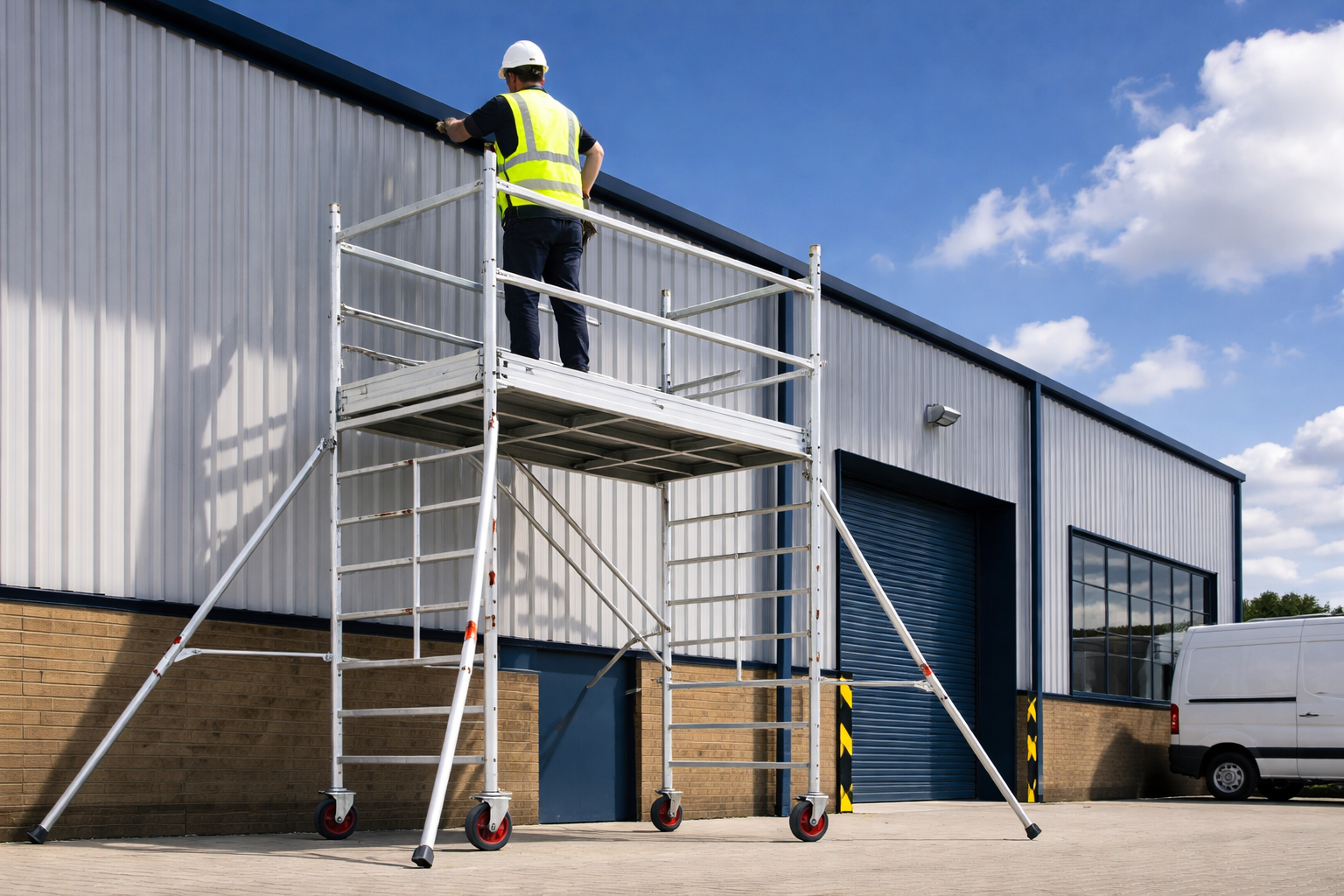
- Wheeled Mobile Aluminium Scaffold Tower – Has wheels for mobility — used for frequent repositioning.
- Adjustable Aluminium Scaffolding – Height can be easily adjusted — great for uneven surfaces. Each type serves a specific job requirement, making aluminium scaffolding highly versatile.
Safety: A Top Priority
Proper use of aluminium scaffolding enhances safety — but only if best practices are followed.
- Always Level the Base – Uneven setups are unsafe.
- Lock All Wheels – For mobile towers, wheels must be locked before climbing.
- Use Guardrails – Fall protection should be installed on all open sides.
- Limit Load – Do not overload platforms. Always check the load capacity.
- Inspect Regularly – Daily and weekly inspections keep the scaffold safe throughout the project. Safety isn’t optional — it’s mandatory. A safe scaffold system protects your team, tools, and project timelines.
Frequently Asked Questions (FAQs)
Yes. Though lighter than steel, well‑designed aluminium scaffolds support high working loads when installed correctly.
Absolutely — it resists corrosion and handles weather better than many alternatives.
Depending on size and complexity, setups can range from minutes for small towers to hours for larger systems.
Conclusion
Aluminium scaffolding is an essential solution for safe, efficient, and cost‑effective access in construction and maintenance work.
At AQaccess, we offer a wide range of aluminium scaffold systems designed for durability, ease of use, and safety on site.
Whether you need a mobile aluminium scaffold tower, double width scaffold, or adjustable aluminium system, our products help you work smarter — not harder.