Choosing the right podium platform can mean the difference between a quick, safe job and repeated delays or—worse—an injury. Whether you’re specifying equipment for maintenance, inspection, electrical fit-out, or facilities management, this guide walks you through practical selection criteria, safety considerations, and real-world examples so engineers and site managers can make confident, informed choices.
_____________________________________________________________________________________________
Why the right podium matters
Working at low-to-medium heights is one of the most common activities across construction, facilities and industrial projects. Falls from elevation remain a leading cause of fatal and non-fatal injury in construction and related industries — which is precisely where properly selected and used podium platforms pay dividends. Choosing an unsuitable platform increases risk, downtime, and total cost of ownership.
_____________________________________________________________________________________________
Understand the work environment first
Before selecting a platform, capture the specifics of the task and environment. Use this checklist
Task profile
- Working height required (measured to where the worker’s hands reach).
- Duration and frequency of use (single-task vs. all-day).
- Tools and materials to be carried on the platform.
- Need for mobility (move-after-each-task) vs. prolonged stationary work.
_____________________________________________________________________________________________
Environment & constraints
- Indoor vs. outdoor (wind, rain, uneven ground).
- Access limitations (narrow aisles, doorways, stairs).
- Surface type (concrete slab, compacted soil, raised floor).
- Presence of electrical hazards (need for non-conductive materials).
Mapping these variables narrows the equipment types that are safe and efficient for your use-case.
_____________________________________________________________________________________________
Podium platform types — pros and cons
1. Basic fixed podium steps
Good for: quick maintenance tasks on flat indoor surfaces.
Pros: compact, lightweight, fast to deploy.
Cons: limited work area and load capacity; not ideal where tools/materials must be staged.
_____________________________________________________________________________________________
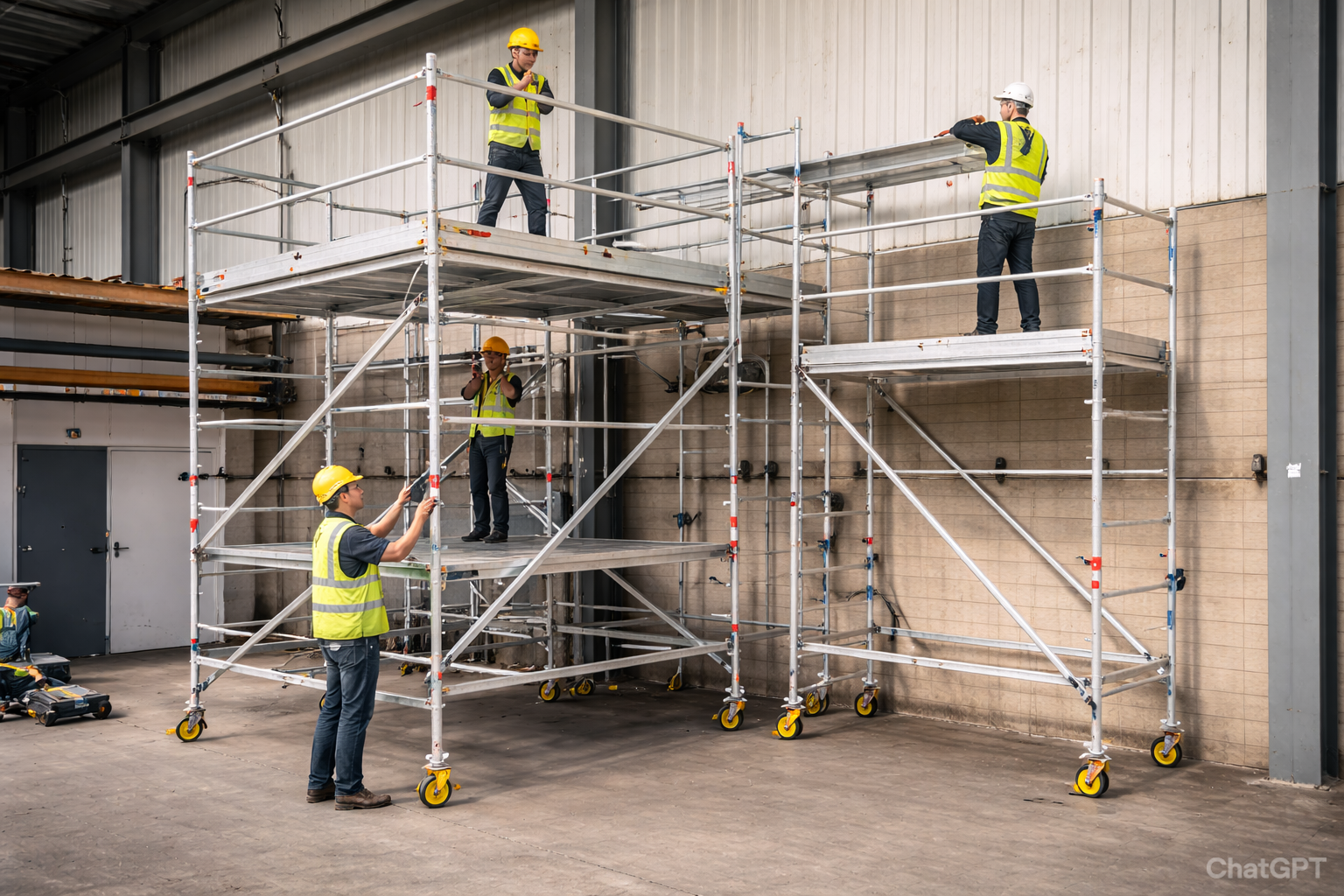
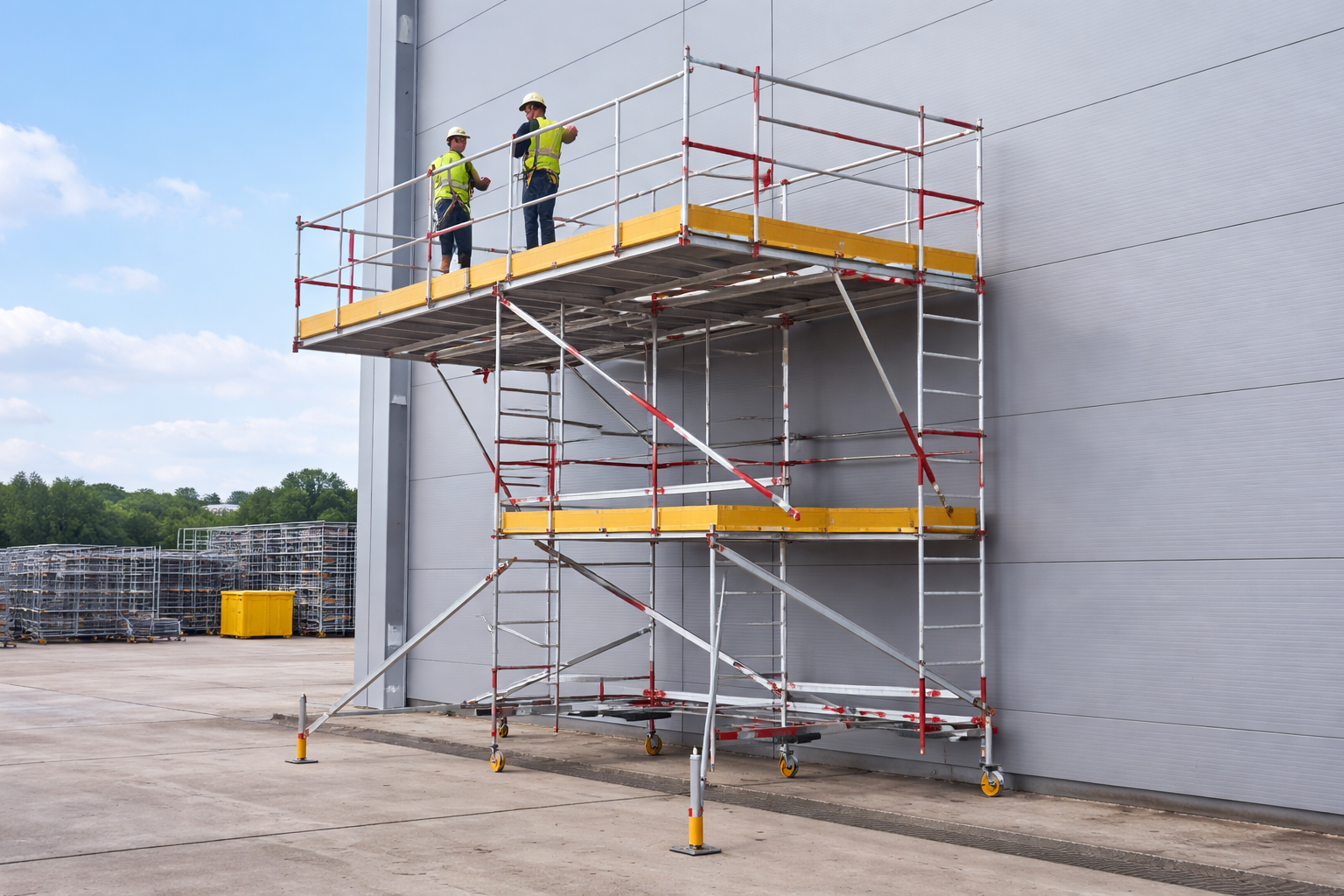
2. Mobile podium towers (wheeled)
Good for: repeated short tasks across a facility (maintenance, electrical runs).
Pros: mobility, larger platform area, integrated guardrails.
Cons: must be levelled and wheels locked; not for rough outdoor terrain unless specified.
_____________________________________________________________________________________________
3. Foldable/aluminium podium platforms
Good for: operations needing transit through narrow access and low weight handling.
Pros: aluminium podium platform models are lightweight, corrosion-resistant, and often foldable for van storage. They accelerate manual handling and reduce fatigue. Aluminium extrusions are widely used in industry and are driving product innovation due to performance and recyclability.
Cons: ensure aluminium components meet required load and deflection specs; cheaper builds can compromise robustness.
_____________________________________________________________________________________________
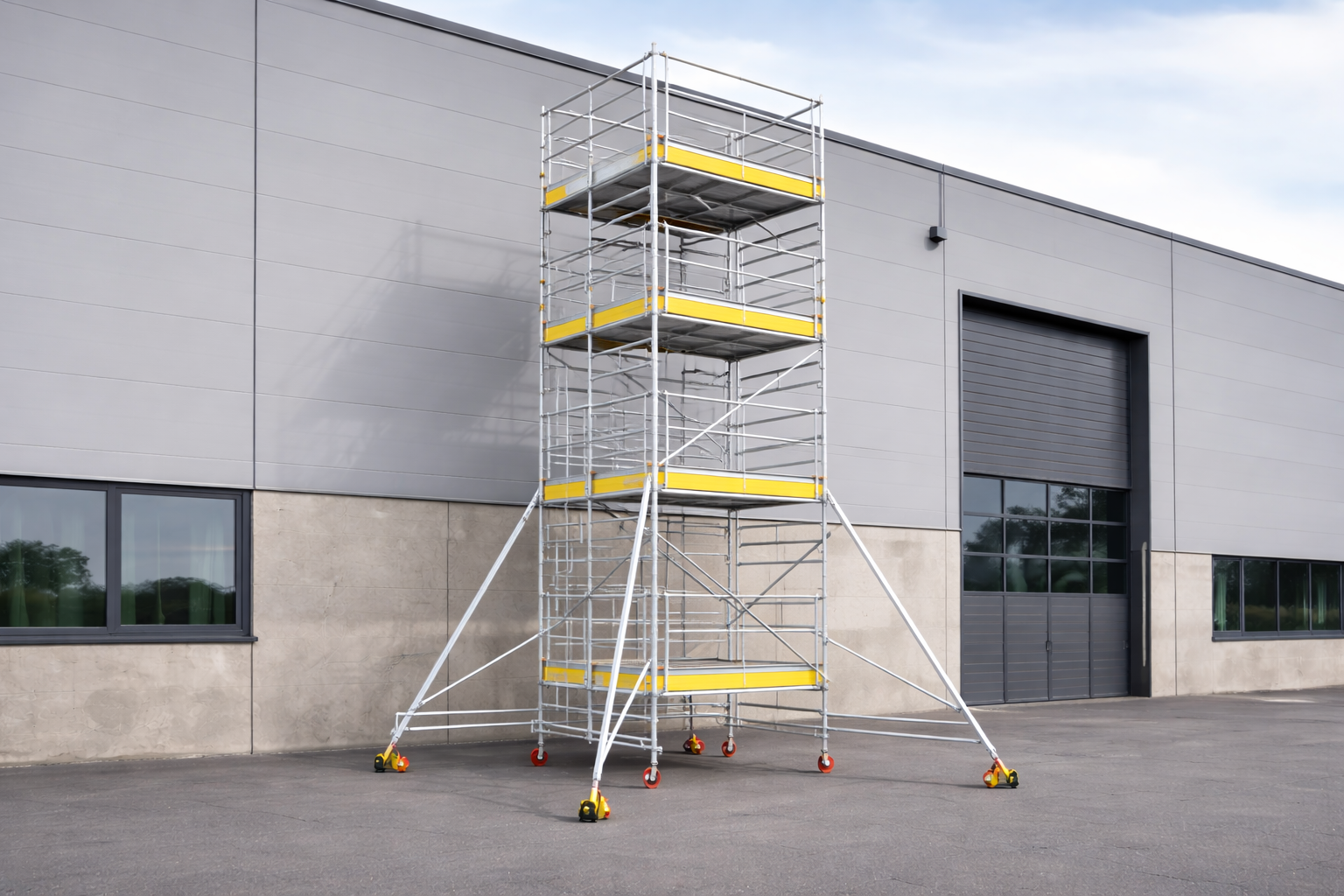
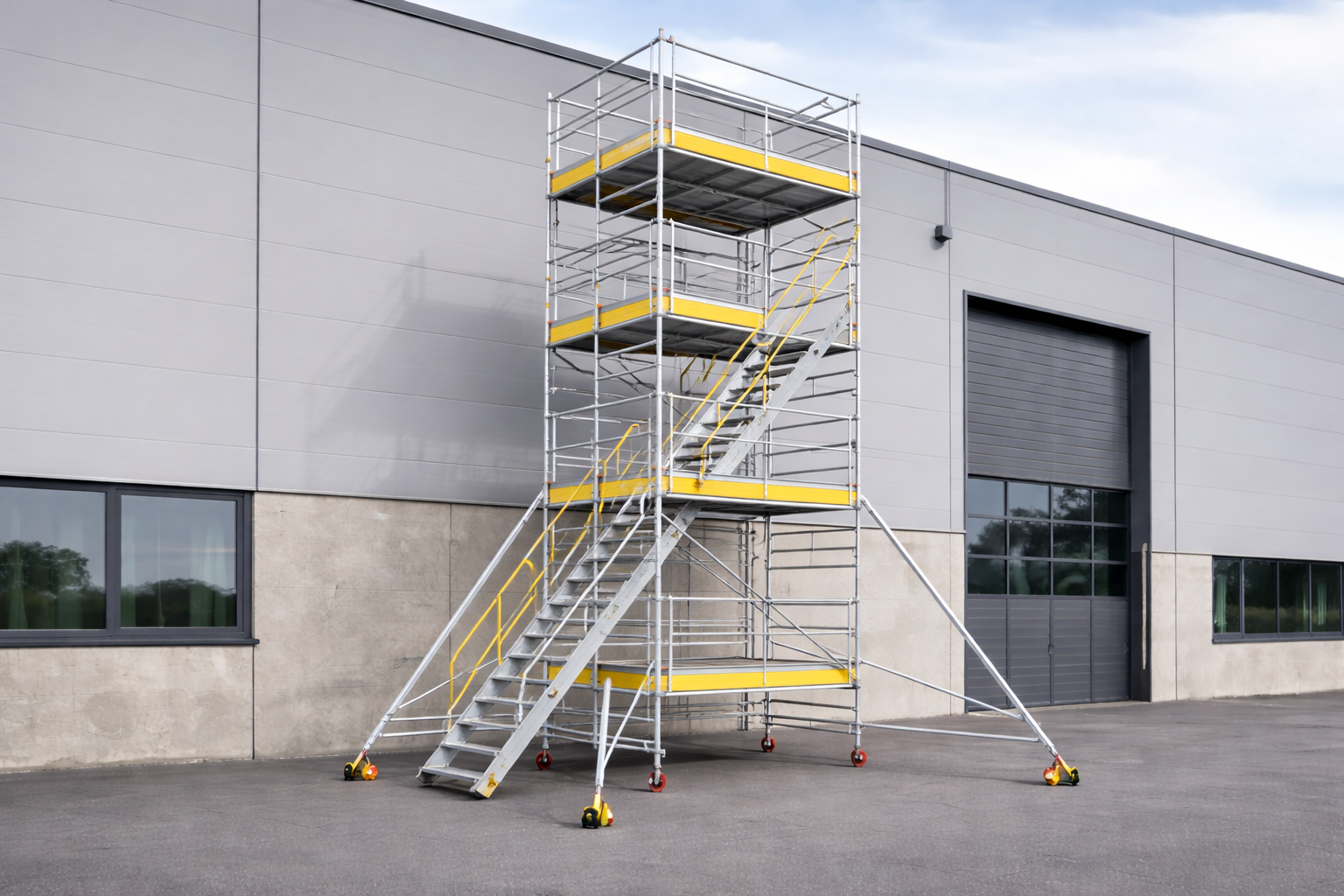
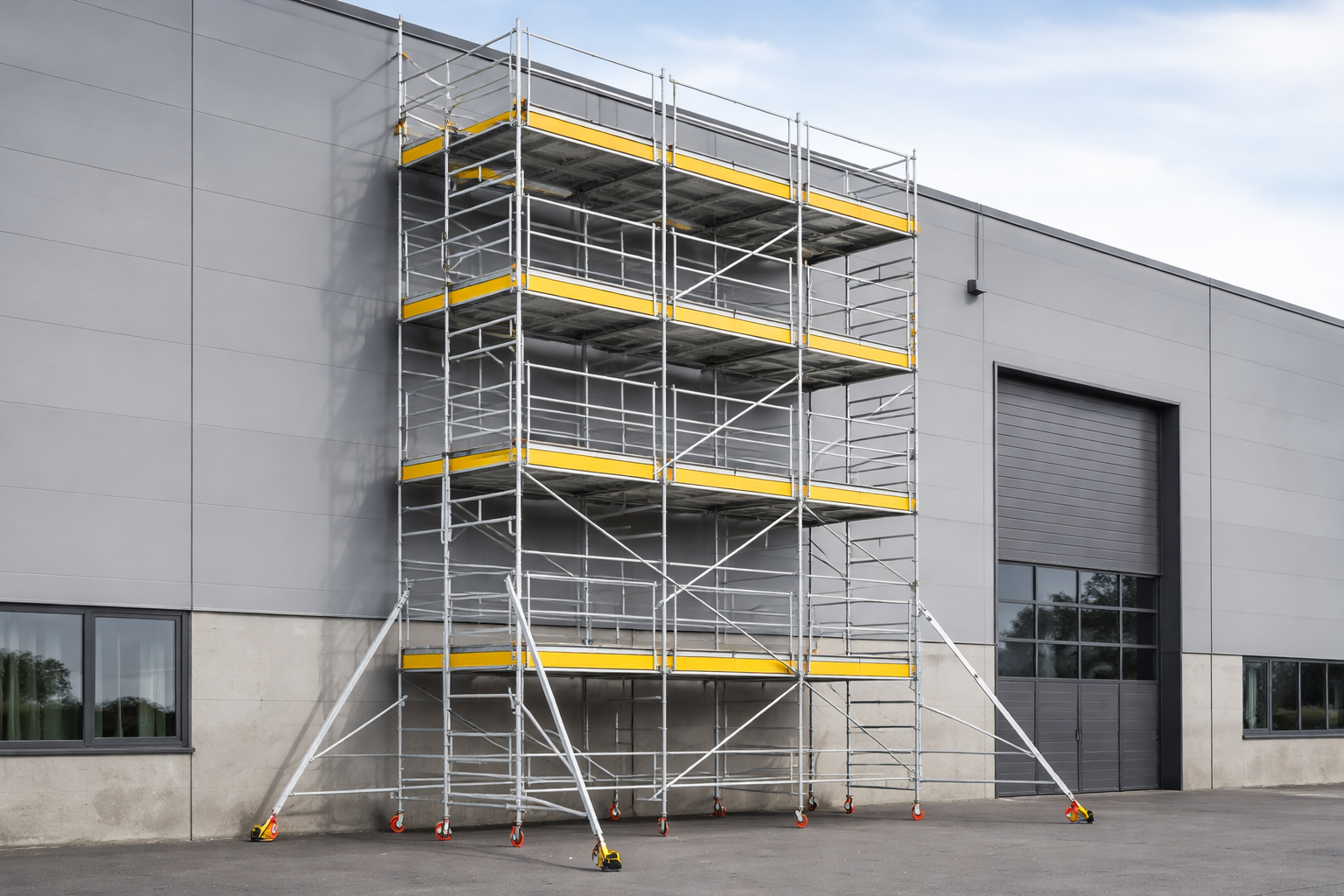
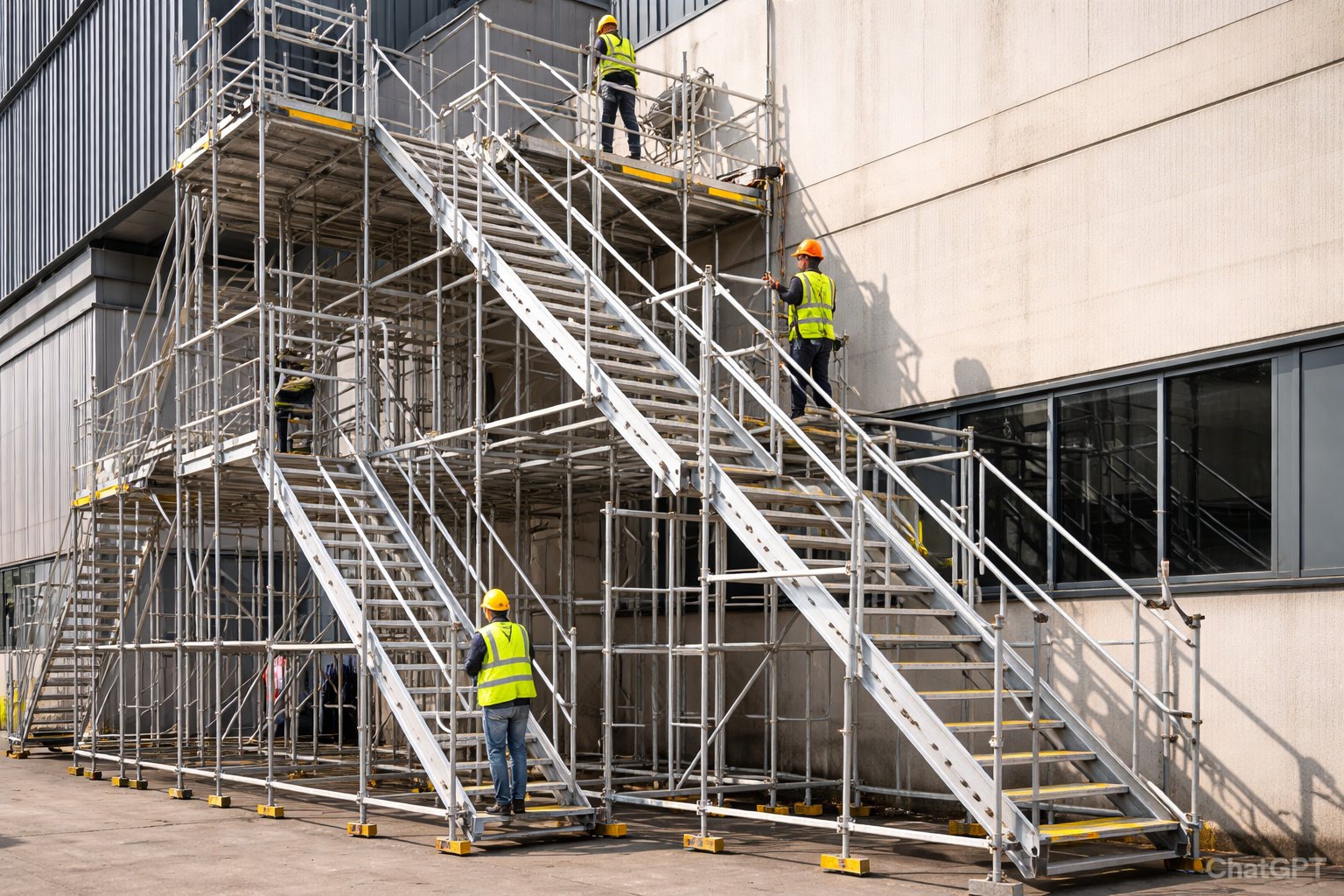
4. Low-level tower scaffolds
Good for: longer-duration tasks where work needs to be performed from a stable, elevated workspace.
Pros: larger working area, higher load capacity, can be fitted with toe boards and access ladders.
Cons: heavier, needs more time to assemble and inspection regimes.
_____________________________________________________________________________________________
Safety features to require (minimum)
When specifying or buying a podium platform, ensure it includes or can accommodate:
- Full guardrail system (top rail, mid rail, toe board) compliant with regional standards. Many guidance documents require top rails and intermediate rails designed to handle specified live loads.
- Non-slip platform surfaces and serrated steps.
- Secure access route — built-in steps or ladders; never climb outside the platform.
- Locking casters with clear instruction for use (retractable or foot-operated).
- Load rating and manufacturer’s assembly/inspection instructions available on site.
- Inspection checklist and tagging for regular checks before use. Guidance documents and toolbox talks recommend erection on a firm level base and pre-use inspections.
_____________________________________________________________________________________________
Selection matrix — match platform to environment
Use this simple decision matrix to shortlist options:
- Indoor, low height (< 1.5 m), narrow access, frequent moves → Foldable aluminium podium platform (lightweight, compact).
- Indoor, medium area work, multiple tools, repeated stops → Mobile podium tower with large deck and lockable casters.
- Outdoor, uneven surfaces, longer-duration work → Low-level tower scaffold with outriggers or a dedicated scaffold solution.
- Single-person quick tasks where ladder temptation is high → Podium step with guardrails (safer than a ladder).
_____________________________________________________________________________________________
Ergonomics and productivity considerations
A properly chosen podium platform speeds work and reduces ergonomic strain:
- Larger working decks reduce awkward postures and overreaching.
- Platforms with tool trays and material staging reduce trips up and down.
- Lightweight aluminium podium platforms reduce manual lifting injuries when moving from van to site. Recent industry adoption shows preference for aluminium for small-to-medium tasks due to handling benefits and lifecycle advantages.
_____________________________________________________________________________________________
Compliance, standards and maintenance
Different regions reference specific standards for access equipment and scaffolds. Key actions:
- Check local statutory guidance (e.g., HSE in the UK, OSHA/BLS resources in the US). Guidance strongly emphasizes fall prevention and that falls account for a significant portion of construction fatalities—making appropriate platform selection and training critical.
- Ensure products meet applicable standards (EN 131 series in Europe for ladders and steps; national scaffolding regs for towers).
- Institute a regular inspection regime and keep records. Pre-use checks should be routine and recorded on a simple tag or log.
_____________________________________________________________________________________________
Cost of ownership — think beyond purchase price
Total cost = purchase + training + inspections + storage + downtime. A few notes:
- Aluminium models often cost more up-front than basic steel podiums but can save on transport and handling and resist corrosion, lowering lifecycle costs. Market reports show aluminium extrusions and products are a growth area in downstream applications.
- Cheaper podiums lacking clear documentation or certification can increase risk and hidden costs (insurance, fines, injury downtime).
_____________________________________________________________________________________________
Case study — Facilities maintenance at a commercial campus
Project brief: A facilities manager at a multi-building commercial campus needed a safe solution for routine HVAC access, light fitting replacements, and sign maintenance across offices with narrow corridors and frequent relocations between floors.
Challenge: Traditional step ladders caused delays and near-miss incidents. Large tower scaffolds were overkill and slow to mobilize.
Solution: The team trailed a foldable aluminium podium platform (600 × 800 mm deck, guardrails, lockable casters, fold-flat for van storage). They introduced a pre-use inspection checklist and user training for staff.
Outcome:
- Setup time per task dropped by ~60%.
- Staff reported less musculoskeletal strain when moving equipment between floors.
- Near-miss reports related to working at low heights decreased.
- Project managers estimated a 12–18-month payback on the extra procurement cost due to productivity gains and reduced downtime.
_____________________________________________________________________________________________
Latest trends to watch
- Lightweight alloys & recycled aluminium: Manufacturers are adopting more recycled aluminium and optimized extrusions to lower weight and environmental footprint.
- Modular decks & integrated tool storage: Platforms now offer bolt-on trays and tool holders to reduce trips.
- Digital inspection records: Mobile apps for pre-use checks and tagging help maintain inspection histories and compliance.
- Demand for safe ladder alternatives: Growing industry emphasis on replacing step ladders for frequent tasks with podiums/towers is supported by safety campaigns and statistics about fall-related fatalities.
_____________________________________________________________________________________________
Practical procurement checklist
When buying or hiring, require the supplier to provide:
- Manufacturer datasheet with load rating and dimensions.
- Certification or declaration of conformity to local standards.
- User and maintenance manual.
- Training or demonstration for on-site teams.
- Warranty and spare parts availability.
_____________________________________________________________________________________________
Implementation — training and on-site rules
- Train every user on correct setup, caster locking, and the prohibition on climbing guardrails.
- Post a short toolbox talk covering the podium’s safe use.
- Use a tagging system for routine inspections and remove defective units from service immediately. Guidance and toolbox talk templates exist and stress erection on firm, level bases and correct locking.
_____________________________________________________________________________________________
Conclusion — select smart, work safer
Selecting the right podium platform is a balance of safety, productivity, and lifecycle cost. For indoor, frequently moved tasks, a aluminium podium platform often offers the best compromise between portability and safety. For longer-duration or outdoor work, consider tower scaffold solutions with higher load capacity. Always prioritize certified equipment, planned inspections, and user training — the statistics on falls and construction fatalities make clear that prevention matters.
Call to action: If you’d like, provide the specifics of your work environment (typical working height, indoors/outdoors, tools carried) and I’ll recommend two exact models (one budget-friendly and one premium) with a one-page procurement checklist tailored to your site.
_____________________________________________________________________________________________
FAQ
Q1: Are podium platforms safer than ladders?
Yes — podium platforms provide a fully enclosed platform and stable standing area which reduces overreach and the need to maintain three points of contact, making them a safer alternative for many low-height tasks. Always ensure the podium is used per manufacturer instructions.
Q2: When should I choose an aluminium podium platform over steel?
Choose aluminium podium platforms when portability, corrosion resistance, and ease of manual handling matter (e.g., frequent moves, van storage, indoor commercial work). Verify load ratings and build quality; aluminium is lighter but must meet the same structural criteria.
Q3: How often should podium platforms be inspected?
Perform a visual pre-use check every day and a formal inspection on a scheduled basis (monthly or per site policy). Keep records of inspections; remove and tag out any unit with damage or missing components. Manufacturer guidance and local standards will specify exact intervals.